
Come 14th February, and the calendar is filled with a rose-day and a chocolate-day and a teddy bear-day, and a Promise-day and what not!! These many celebrations surrounding the Valentine’s Day are popular among the Indian youth over the past few decades.
Question is Did India really need to borrow a festival of love from the West?
Long before Valentine’s Day became a global celebration, India had been telling, singing and celebrating love stories for thousands of years. Our Vedas, Epics, Puranas, poetry and dramas are filled with stories of love—love between husband and wife, lovers separated by fate, couples reunited after great hardship, and women who boldly chose and fought for the person they loved.
So, before you buy another box of chocolates, let us take a walk through some of them.
Who was Saint Valentine?
The origins of Valentine’s Day are not as straightforward as the modern celebration suggests. The name is associated with at least two people from Europe of the 3rd century.
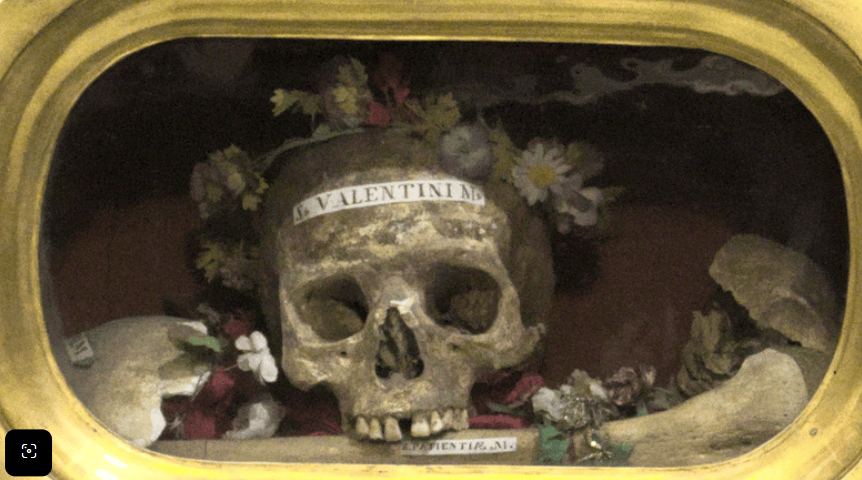
According to one account, Valentine was a priest who defied a Roman prohibition on soldiers marrying and secretly performed their weddings. Another tradition tells of a Valentine who was imprisoned and sentenced to death for preaching Christianity. Another theory suggests that Romans used to celebrate arrival of spring around 14th February and the Church merely took it over by establishing a feast of St. Valentine on the same day. Over the centuries, its religious character faded, and the day became associated with romantic love.
In 1969, the Catholic Church removed Saint Valentine’s feast from its official calendar because there was insufficient reliable information about the saint.
The modern Valentine’s Day is largely a product of the last few decades. A Product of the American consumer culture that transformed it into a shopping festival. Greeting cards, chocolates, roses, teddy bears and gifts to be bought for “Your Valentine!”
Curiously India already had an extraordinary treasure of celebration of love! And her stories are not merely stories of romance. They speak of commitment, courage, companionship, loyalty, sacrifice and the ability to stand by the person one loves.
Love in the Vedas
Some of the oldest Indian literature contains beautiful reflections on marriage and companionship.
The Rig Veda has the famous Vivaha Sukta (10.85), associated with the marriage of Surya. The verses contain blessings and sentiments for the bride and groom as they begin their life together. The spirit of the wedding is beautifully expressed in the imagery of two people joining their lives together:
I take your hand in mine; let us live together, build our home together, fulfil our duties together, and remain together for a hundred autumns.
The marriage is not merely about two people falling in love. It is about two people becoming partners in life. A commitment not just for one life, but for many more to come!
Arthaveda has prayers to attract some one you love; and to make them fall in love with you! It also contains a ‘Pati-Patni Sukta’ (2.30). In it the husband prays, “May my wife stay with me for eternity, may she love me forever, may she never leave me and let me experience the pain of parting.” The Rishi also tells the husband and wife in this Sukta- “May you two live together, walk together, work together, attain victory together and gain prosperity together. May your souls connect with each oth er! Go for a walk where the beautiful birds sing melodious songs. Have loving conversations with each other. Be come an ideal husband and wife!” What is love? How should one express love? How should husband and wife interact with each other? The advice given by the Rishi is applicable even today.
Thousands of years ago, Indian texts were already imagining marriage as companionship.
Pururava and Urvashi
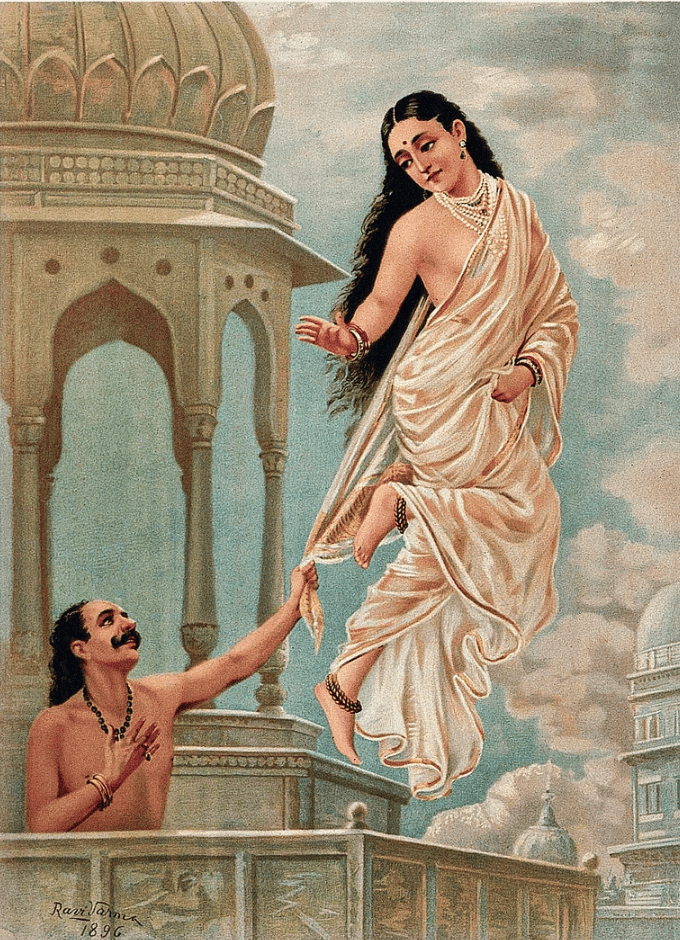
Then there is the unforgettable tale of love and separation. Of Pururava, a mortal king and Urvashi an immortal apsara. They met, fell in love, and Urvashi came down to Earth to live with him.
But theirs was not a story with a happy ending. Urvashi eventually had to return to heaven, leaving Pururava devastated by separation. It became one of the earliest tales of love and longing in Indian literature.
Centuries later, Kalidasa wrote a play on this – the Vikramorvashiyam.
Rukmini Writes the First Love Letter
If you are looking for a bold heroine, look no further than Rukmini.
The Mahabharata and later traditions tell us of Rukmini, the princess of Vidarbha, who loved Krishna. Her brother, however, wanted her to marry another man.
So what did Rukmini do?
She wrote to Krishna.
Her message was essentially this: I have chosen you as my husband. Come and take me away before I am forced to marry someone else.
It is difficult to imagine a more confident proposal.
Rukmini did not sit helplessly and wait for fate to decide her life. She made her choice, expressed it clearly and took the first step.
Krishna came, carried her away and soon they were married!
And so, centuries before the arrival of Valentine’s cards, Indian literature already had a memorable love letter—and a woman courageous enough to write it.
The Mahabharata: Romance, Adventure and Drama
The Mahabharata is filled with stories of love.
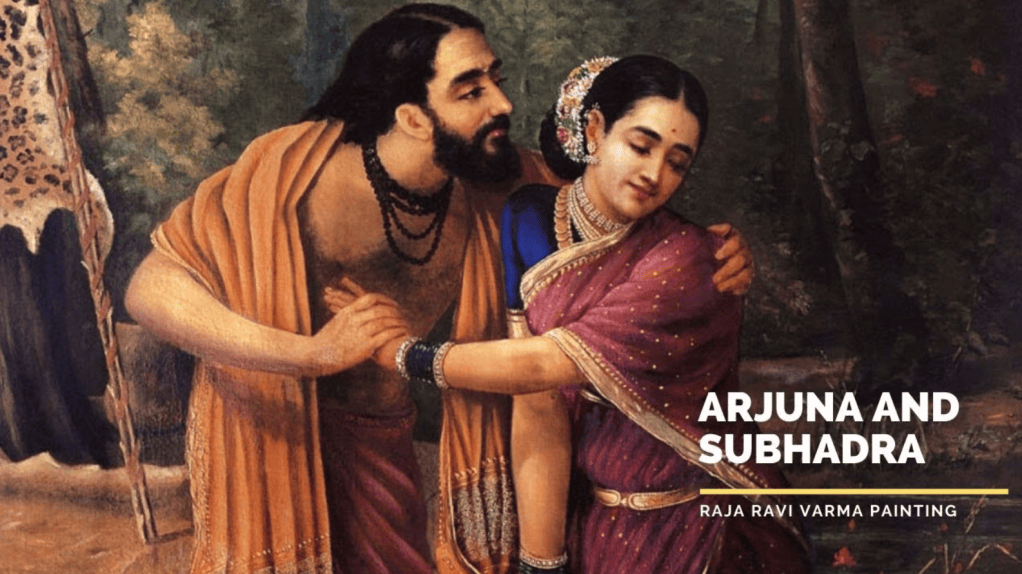
There is the adventurous story of Arjuna and Subhadra, with Krishna helping Arjuna carry away his beloved. There is the delightful tale of Abhimanyu and Vatsala, involving Ghatotkacha and his magical powers—an ancient romantic comedy.
There is the difficult story of Dushyanta and Shakuntala. Dushyanta marries Shakuntala in the Gandharva tradition but later fails to acknowledge her. And Shakuntala does not quietly accept humiliation. She confronts him. She speaks with dignity and courage and reminds him of his responsibility. Dushyanta eventually recognizes his mistake and accepts her.
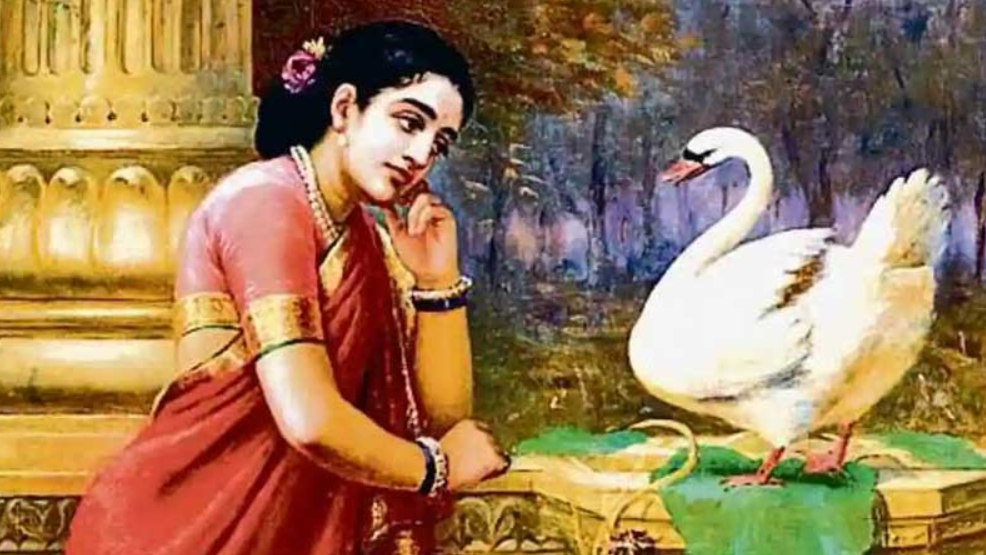
One of my favourites is Nala and Damayanti. In it, once again, it is the woman who displays extraordinary courage and intelligence. When fate separates Damayanti from Nala, she does not simply wait for her husband to return. She uses her intelligence, courage and strategy to find him and bring their broken life together again.
Love Stories in Classical Sanskrit
Classical Sanskrit literature gives us many more stories of love. Kalidasa’s Raghuvamsha tells the tender and tragic story of Aja and Indumati. His Malavikagnimitram is a delightful romantic comedy centered on the love and wedding of Malavika and King Agnimitra.
And then there is Meghaduta—the story of a Yaksha separated from his beloved wife. Unable to reach her himself, he sends his message through a cloud. No telephone. No text message. No WhatsApp. Just a lonely lover looking at a cloud and saying, “Carry my message to her.”
There were also numerous plays about King Udayana and his romantic adventures, including Svapna-Vasavadatta and Ratnavali. Indian classical literature did not shy away from romance. It celebrated it in every form—playful, passionate, tragic, humorous and deeply emotional.
Madan: The God of Love
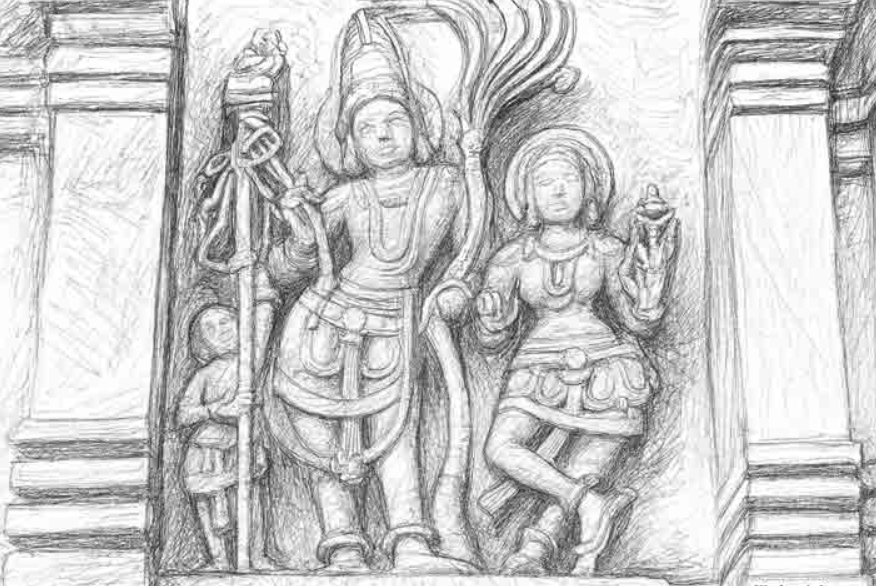
He carries a sweet bow made of sugarcane and shoots love-arrows, flowers, at the hearts of mortals. Spring was traditionally a season of love and celebration. Madan-Utsava was celebrated with great enthusiasm, particularly by young men and women.
The idea of celebrating love during spring was hardly foreign to India. We had our own god of love, our own spring festivals and an enormous literature of romance. And thousands of ways to say “I Love You!”
And Then There Is Rama and Sita
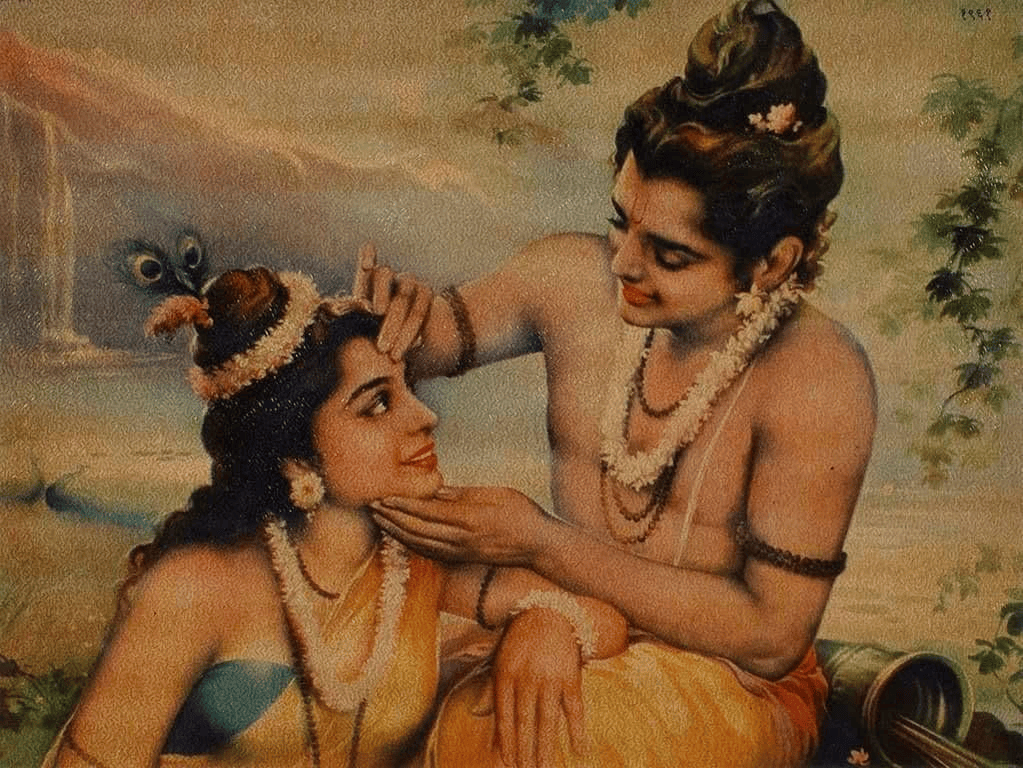
But if I had to choose one Indian love story above all others, it would be the story of Rama and Sita.
Their love is not merely attraction. It is companionship tested by adversity.
When Rama is sent into exile, Sita does not remain behind in the comfort of the palace. She chooses to accompany him into the forest.
During their years in exile, Rama cares deeply for Sita. And when Sita is abducted by Ravana, she refuses every temptation and threat. Ravana offers her wealth, power and a place beside him.
She refuses. She would rather die than abandon Rama.
And Rama? He does not simply mourn and move on. He searches for her. He gathers an army. He crosses forests and mountains. Builds a bridge across the sea. Wages a great war against the powerful Ravana and finally brings Sita home.
This is love as commitment. Love that survives exile, separation and temptation. Love that demands courage.
India Did Not Have Just One Day for Love
Perhaps the most interesting thing is that India never needed a single day to remind people about love. We have an entire calendar filled with celebrations connected with love and marriage.
- Vivaha Panchami celebrates the wedding of Rama and Sita.
- Vata Purnima celebrates the love of Savitri and Satyavan.
- Hartalika, Mangala Gauri Puja celebrates the love of Shiva-Parvati
- Vata Purnima and Karwa Chauth — fasts traditionally observed by wives for the health, longevity and well-being of their husbands.
- Ashunya-Shayana Vrata — 4 fasts traditionally observed by husbands for the health, longevity and well-being of their wives.
These celebrations are woven into the rhythm of life. They remind us that love is not merely butterflies in the stomach or exchanging chocolates on a particular date. Love is choosing one another again and again.
Perhaps We Have Forgotten Our Own Stories
And this is where I find the modern celebration of Valentine’s Day somewhat ironic.
We are heirs to a culture that has produced thousands of years of poetry, drama, philosophy and stories about love. Love stories from the Vedas, the Ramayana and Mahabharata, the Puranas, from plays of Kalidasa and other regional literature too. We have many traditions and celebrations as well.
We are, metaphorically speaking, sitting beneath a Kalpavriksha, a wish-fulfilling tree, surrounded by an extraordinary inheritance.
And yet, when it comes to celebrating love, we often look elsewhere.
There is nothing wrong with enjoying Valentine’s Day. There is certainly nothing wrong with roses, chocolates or expressing affection.
But our young people deserve more.


Leave a Reply