
As Sugriva sends his search parties in different directions in search of Sita, he does much more than give directions. He describes distant lands with astonishing detail.
After crossing Mount Kailasa and the great lake—possibly today’s Pangong Lake—he tells his team that they will come upon a remarkable river.
निस्तुलाभिश्च मुक्ताभिर्मणिभिश्च महाधनैः।
उद्भूतपुलिनास्तत्र जातरूपैश्च निम्नगाः॥ (4.43.42)
He describes a river whose banks are filled with priceless pearls, precious gems, and even gold. He names it Shailoda (शैलोदा)—literally, the river born in the mountains.
Could this be the Hotan (Khotan) River of present-day Xinjiang in China?
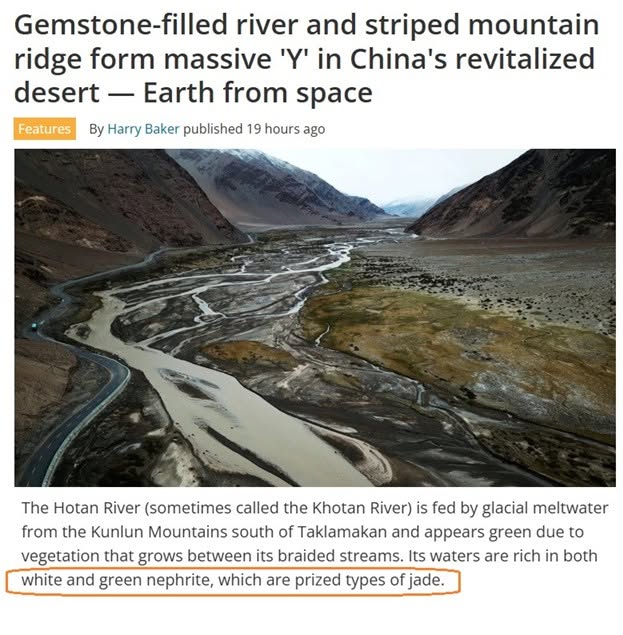
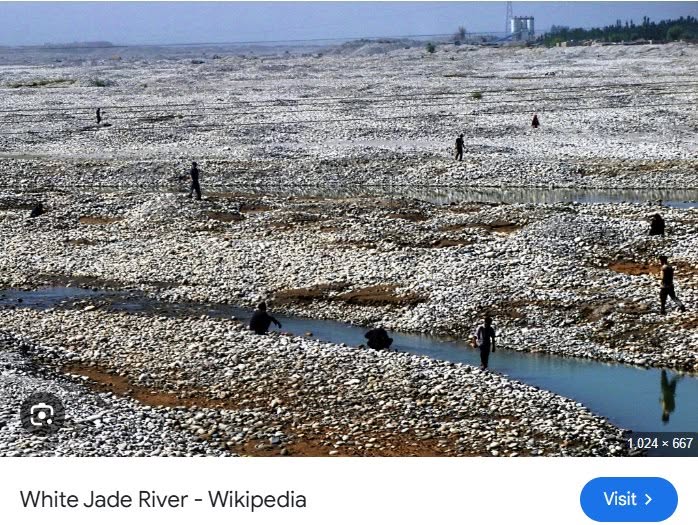
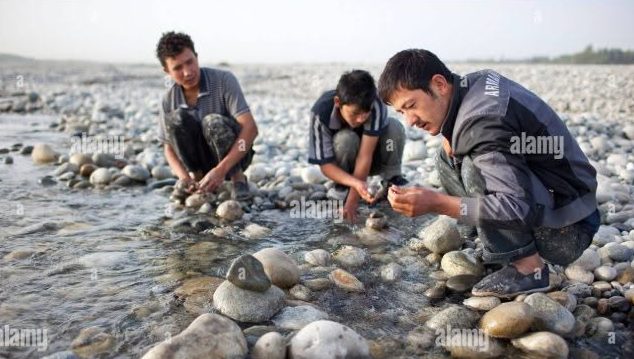

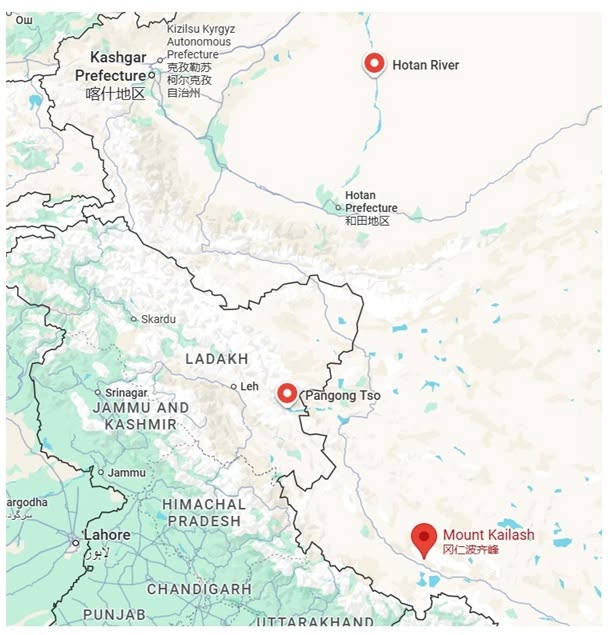
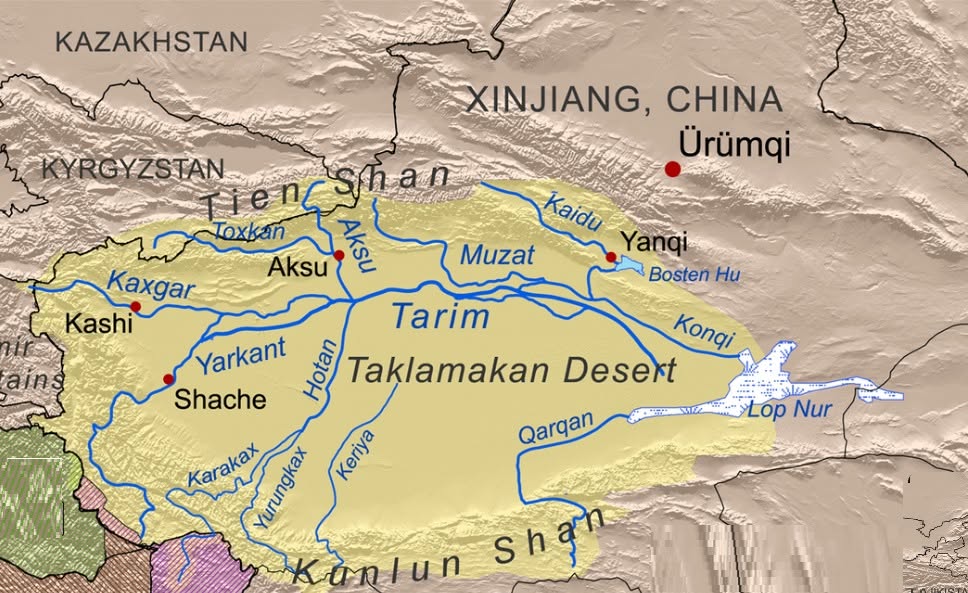
The Hotan River is formed by the confluence of the White Jade River and the Black Jade River, both originating in the Kunlun Mountains before flowing north into the Taklamakan Desert. For thousands of years, this river has been famous for one thing above all else—its jade.
Even today, news reports from China describe the Hotan River as carrying prized white and green nephrite jade in its waters. Every year, thousands of people search its riverbed for these precious stones, continuing a tradition that stretches back millennia.
What is even more intriguing are the place names that survive in the region. On modern maps, one still finds Kashi, a name unmistakably derived from the Sanskrit Kashi. The mighty Tarim River too was known in Sanskrit sources as Sita. These names are reminders of the deep cultural and commercial connections that once linked Bharat with Central Asia along the Silk Route.
Was Valmiki describing the Hotan River? We cannot say with certainty. But the similarities are certainly worth noticing. A mountain-born river. Renowned for precious stones. Flowing from the Kunlun Mountains into the desert. It is a description that fits surprisingly well.
Perhaps these are not mere flights of poetic imagination. They may preserve memories of ancient travellers who journeyed far beyond the Himalayas, observed these extraordinary landscapes, and brought their stories home—stories that eventually found their place in the timeless verses of the Ramayana.


Leave a Reply