
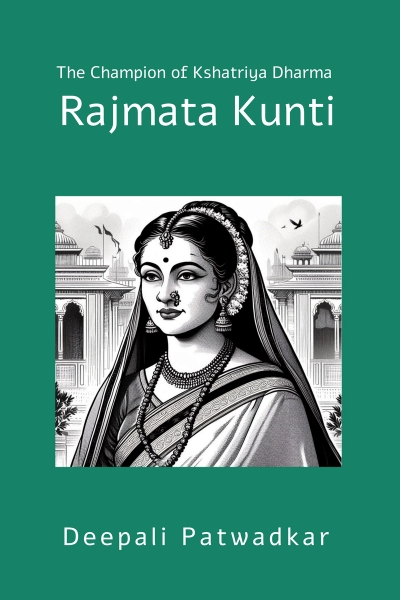
When we think of the Mahabharata, we often think of Bheeshma, Vidur, Krishna and Yudhishthir as great thinkers, philosophers and leaders. Yet, amongst them are some women leaders too, such as Kunti, Gandhari, and Draupadi. They influence kings, shape destinies, and uphold dharma in moments of crisis.
Here we shall see how Kunti stands out as a remarkable example of leadership rooted in Dharma. Kunti is Pandava’s friend, philosopher and guide. Just before the war, her eldest son Yudhishthira hesitates. Known for his love of peace and righteousness, he is willing to avoid war — even if it means injustice. Seeing the danger in it, she sends a powerful message to her sons through Krishna.
The Story That Awakens Courage
Instead of simply instructing Yudhishthira, Kunti tells a story — the story of Vidula and her son Sanjaya. When Sanjaya retreats from battle out of fear, his mother Vidula does not console him. She challenges him, shakes him out of his weakness, and reminds him of his duty as a warrior. Her words are fierce, almost shocking:
त्वमेवं प्रेतवच्छेषे कस्त्राद्वज्रहतो यथा ।
उत्तिष्ठ हे कापुरुष मा शेष्चैवं पराजितः ॥
“O coward! Why do you lie like a lifeless body? Rise! Do not remain defeated!”
Through this story, Kunti delivers her message clearly —Do not let hesitation become weakness.
Interestingly, this message is not unique to Kunti. At the battlefield of Kurukshetra, Arjuna faces a similar crisis. Overwhelmed by emotion, he refuses to fight. That is when Krishna speaks — giving us the timeless wisdom of the Bhagavad Gita.
“How has this weakness come upon you? Cast it aside and rise!”
कुतस्त्वा कश्मलमिदं विषमे समुपस्थितम् ।
अनार्यजुष्टमस्वर्ग्यमकीर्तिकरमर्जुन ॥ २.२ ॥
क्लैब्यं मा स्म गमः पार्थ नैतत्त्वय्युपपद्यते ।
क्षुद्रं हृदयदौर्बल्यं त्यक्त्वोत्तिष्ठ परन्तप ॥ २.३ ॥
Different situations. Different people. But the same core struggle — hesitation in the face of duty. And the same guidance — Rise above it.
Duty Over Fear
Both Kunti and Krishna emphasize one essential truth: A righteous duty must be performed — even when it is difficult. Krishna reminds Arjuna:
यदृच्छया चोपपन्नं स्वर्गद्वारमपावृतम् ।
सुखिनः क्षत्रियाः पार्थ लभन्ते युद्धमीदृशम् ॥ २.३२ ॥
“A righteous war is a gateway to heaven.”
Kunti echoes the same idea:
स्वर्गद्वारोपमं राज्यमथ वाप्यमृतोपमम् ।
And further:
जयन्था वध्यमानो वा प्राप्नोतीन्द्रसलोकताम् ॥
Whether one wins or falls in battle, honour and the higher realm of Indra-Loka await.
Even Krishna reinforces:
हतो वा प्राप्स्यसि स्वर्गं जित्वा वा भोक्ष्यसे महीम् ॥ २.३७ ॥
“If you die, you gain heaven; if you win, you gain the earth.”
The message is powerful and clear: There is nothing to lose when one walks the path of dharma.
The Wisdom of Detachment
Another beautiful parallel between Kunti’s counsel and Krishna’s teaching is the idea of detachment.
Krishna teaches:
सुखदुःखे समे कृत्वा लाभालाभौ जयाजयौ ।
ततो युद्धाय युज्यस्व नैवं पापमवाप्स्यसि ॥ २.३८ ॥
“Treat success and failure alike — and then act.”
Kunti expresses the same wisdom:
अलब्ध्वा यदि वा लब्ध्वा नानुशोचन्ति पण्डिताः ।
आनन्तर्य चारभते न प्राणानां धनायते ॥
“A wise person does not grieve over results — they continue to act.”
This is the essence of Karma Yoga — action without attachment.
What Defines a True Kshatriya?
Krishna describes the qualities of a warrior:
शौर्यं तेजो धृतिर्दाक्ष्यं युद्धे चाप्यपलायनम् ।
दानमीश्वरभावश्च क्षात्रं कर्म स्वभावजम् ॥ १८.४३ ॥
Courage, strength, determination, and leadership.
Kunti, too, defines the same ideal:
यॊ वै कश चिद इहाजातः क्षत्रियः क्षात्रधर्मवित
भयाद वृत्ति समीक्षॊ वा न नमेद इह कस्य चित
उद्यच्छेद एव न नमेद उद्यमॊ हय एव पौरुषम
अप्य अपर्वणि भज्येत न नमेद इह कस्य चित
A Kshatriya must remain fearless, never bowing to fear, always striving forward.
Kunti: A Master of Strategy
Kunti’s brilliance doesn’t stop at moral guidance. Her message also reflects deep political wisdom. She hints at practical strategies every ruler must understand:
- Building alliances
- Using wealth wisely
- Dividing enemies
- Acting with intelligence and foresight
These ideas closely resemble the principles later described in the Arthashastra by Kautilya.
The famous four strategies:
- Sama (conciliation)
- Dana (gifts)
- Bheda (division)
- Danda (force)
Kunti’s thinking reflects all of these. She is not just inspiring courage —she is shaping statecraft.
A Timeless Voice of Leadership
In the end, Kunti’s message aligns perfectly with Krishna’s call:
“तस्मादुत्तिष्ठ कौन्तेय युद्धाय कृतनिश्चयः”
“Arise, O son of Kunti, and resolve to act.”
 Deepali Patwadkar
Leave a comment